

No one likes to watch their investments lose money, but downward market volatility can feel particularly scary for people who plan to retire in the near future. Their anxiety is understandable. They’ve spent their careers building their nest eggs and now—at a time when they plan to give up their income-producing jobs—they face the prospect of living off less money than they had envisioned.
Fortunately, it’s rarely as simple as that. As with all things financial, it’s important to look at the big picture. If you’re nearing retirement and worried about market volatility, keep these factors in mind:
- Concentrate on your financial goals. No one can say with certainty what will happen to stocks over the next week, month, year, or decade. But what may be more certain is your financial goals for those time frames. Ensure your portfolio is designed to help you achieve your key priorities, rather than to hit a specific market outcome. Remember that timing the markets is rarely successful because there are so many unknown factors influencing how stocks move.
- Keep your emotions in check. Market corrections, dips, and swings are inevitable for investors in the short term, so it’s important to look beyond the daily hype and headlines. Instead, watch for broad, persistent trends that could provide opportunities or challenges for your overall financial situation. As you ponder adjustments to your portfolio, remember that while you can’t control the market, you can control your reaction to it.
- Reassess your portfolio according to your retirement date and risk tolerance. Two items that are more in your control are your risk tolerance and retirement date. Keep in mind that each person has an individual comfort level with taking risks. You may find that your ability to handle market swings varies over time, particularly if you’ve experienced volatility in the past. Big market moves or dips may be a good time to step back and evaluate your portfolio according to when you anticipate needing to generate income from your investments:
- If you have a decade or more before retirement, prioritize building your investments using a diversified asset mix. Investing regularly in the market could help volatility work to your benefit, as you have more time to ride out short-term turbulence and overcome potential losses. As you refine your retirement plans, calculate how much money you need to live the lifestyle you want, while also preparing for unexpected expenses such as healthcare. Knowing how much you need to retire can help you stay confident in your financial strategy amid market uncertainty.
- If you are within a few years of retirement, you likely are more sensitive to short-term market moves. At this point, you may consider gradually adjusting your portfolio to reduce your level of risk. If you wait until retirement to adjust your investment mix, you could be surprised by untimely market volatility or a downturn. If this happens, it could leave you with less money in retirement compared with your plans, forcing you to modify your goals or lifestyle. If the market is experiencing a correction, you may want to wait for it to rebound (as it historically has) before making adjustments. Making changes immediately amid volatility could lock in possible losses.
- If you are already retired, be patient and maintain your diversified investment strategy. If the potential for a downturn or increased volatility makes you nervous, consider reallocating your portfolio accordingly. Keep in mind that even in retirement it may make sense to have part of your investment mix focused on growth. Today’s long life expectancies mean that you need to be prepared for the likelihood that living costs, particularly healthcare, will be higher in the later decades of your retirement.
If you have concerns about the effect of market volatility on your investments, you are not alone. If you want additional support, consider consulting a financial advisor who can review the details of your unique financial situation.
Together you can determine if your portfolio is on track to reach your goals.
About the Author
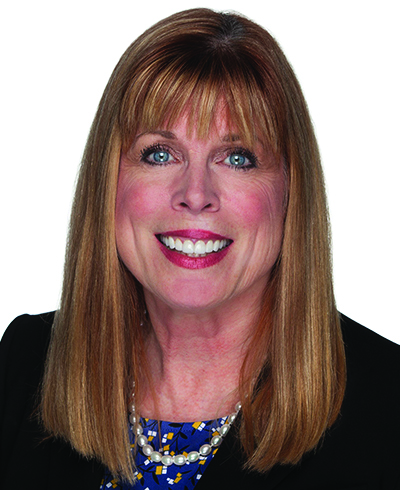
Dianne Lynch, CFP, ChFC, APMA, AWMA, CRPS, CRPC, is a financial advisor and vice president with Ameriprise Financial Services, LLC, in San Jose, CA. She specializes in fee-based financial planning and asset management strategies and has been in practice for 43 years. Ms Lynch can be reached at www.ameripriseadvisors.com/dianne.lynch/, 408-963-2303, and 225 W. Santa Clara St. Ste. 1600, San Jose, CA 95113.
Certified Financial Planner Board of Standards, Inc. (CFP Board) owns the CFP® certification mark, the CERTIFIED FINANCIAL PLANNER™ certification mark, and the CFP® certification mark (with plaque design) logo in the United States, which it authorizes use of by individuals who successfully complete CFP Board’s initial and ongoing certification requirements.
Ameriprise Financial, Inc. and its affiliates do not offer tax or legal advice. Consumers should consult with their tax advisor or attorney regarding their specific situation.
Stock investments involve risk, including loss of principal. High-quality stocks may be appropriate for some investment strategies. Ensure that your investment objectives, time horizon, and risk tolerance are aligned with investing in stocks, as they can lose value.
There are risks associated with fixed-income investments, including credit risk, interest rate risk, and prepayment and extension risk. In general, bond prices rise when interest rates fall and vice versa. This effect is usually more pronounced for longer-term securities.
The initial consultation provides an overview of financial planning concepts. You will not receive written analysis and/or recommendations.
Investment products are not insured by the FDIC, NCUA, or any federal agency, are not deposits or obligations of, or guaranteed by any financial institution, and involve investment risks including possible loss of principal and fluctuation in value.
Investment advisory products and services are made available through Ameriprise Financial Services, LLC, a registered investment adviser.
Ameriprise Financial cannot guarantee future financial results.
Securities offered by Ameriprise Financial Services, LLC. Member FINRA and SIPC.
© 2025 Ameriprise Financial, Inc. All rights reserved.
File #5719132. (Approved until 06/30/2025)