

Recent headlines have been dominated by economic policy and market fluctuations, sending shockwaves through the stock market. For investors, each new update seems to bring another round of volatility. While tariffs are the latest trigger for market volatility, the reality is that markets are always responding to something—from geopolitical events to inflation data to interest rate shifts—and the feeling these changes evoke are timeless: uncertainty.
Whether you’re decades from retirement, approaching it in the near term, or already drawing down your portfolio, now is a good time to revisit your plan—and remind yourself what you can control when the markets feel unpredictable.
For Those Decades From Retirement
Revisit your views on risk. There’s nothing like a significant market downturn to remind you that investing involves risk. Market swings provide an opportunity to reassess the level of risk in your portfolio and determine whether you still think the amount is appropriate for your circumstances. The level of comfort (or discomfort) you feel when the market moves up or down substantially is a good starting point on whether your portfolio fits your risk profile.
Remember that time is on your side. In theory, the longer you have to let your money work for you, the less concerned you should be about short-term market moves. Fluctuations in stocks are nothing new. And historically, markets have recovered from losses incurred during corrections or bear markets. By the time you’re ready to retire, it’s likely that a market downturn in hindsight will only look like a bump in the road.
Put volatility to work for you. Market volatility can work to your benefit by tapping into the power of a strategy called dollar-cost averaging. Here’s an example of how it works: Say you invest a fixed amount of money at regular intervals, regardless of market conditions. When the market dips, you can purchase more shares. And when the market rises, you can purchase fewer. The goal is to end up with more shares, often purchased at an overall lower cost per share than if you had invested all the money at once. Then the shares have the potential to increase in value over time. (Dollar-cost averaging does not assure a profit or protect against a loss in declining markets.)
This strategy is one example of how volatility may work in your favor if your investments move up or down in the short term, while eventually recovering lost ground in the long term. If you make regular contributions to a workplace retirement plan, IRA, or other investments, you are likely already using this strategy. If not, consider this example as motivation to explore whether you can make consistent investing a goal for this year.
For Those Nearing Retirement
Ensure your investments are diversified. Various parts of the market react to headlines and economic drivers differently. For those nearing retirement, the recent spike in volatility is a reminder of how having a broadly diversified portfolio can help reduce your investment risk.
How do you know if you’re properly diversified? The simplest answer is to check to see that your portfolio contains a mix of stocks, bonds, mutual funds, short-term cash investments, savings, and other investing vehicles that consider your goals and comfort level with risk.
Going a step further, ensure you understand how each asset or investment in your portfolio is helping you reach your financial goals. If you’re unsure or want a second opinion, consider consulting a financial advisor for guidance.
Balance your need for protection with growth. Protecting your portfolio from current or future market downturns becomes more important as you approach the day when you start living off your savings. Consider investing the money you plan to use for income in the first few years of retirement more conservatively in liquid vehicles that are easy to access. This can help you feel that you are prepared to handle upcoming expenses should the markets swing.
It’s also important to remember that your retirement could last 20, 30, or even 40 years. Balance your need for protection with continuing to grow your nest egg. Assets you won’t need for some time could be more aggressively positioned. At a minimum, ensure your assets can keep on pace with rising inflation.
For Those in Retirement
Review your withdrawal strategy. Depending on how much money you have invested in stocks, your portfolio may lose value when the market dips. If market swings and the potential for a greater downturn make you nervous, revisit the amount of money you withdraw monthly to meet your expenses.
As you review, the goal is to be assured that the amount you withdraw to meet the next year or two of expenses does not put your long-term financial security in jeopardy. If your base of assets is reduced, you may have to trim your withdrawal amount to assure you have a sustainable long-term income strategy.
Don’t take unnecessary chances in your stock exposure. For the long-term investor—which includes you as a retiree—volatility in equities can work in your favor. It’s possible that you will spend 1 to 3 decades in retirement, giving you time to withstand some market moves. At the same time, it’s important to preserve your base of savings and not be overexposed to stock risk.
Review your exposure in the context of your full financial plan to evaluate if you are taking the right amount of risk.
Regardless of where you are in your financial journey, market movement provides an opportunity to compare your investment strategy with your goals. Are you on track? No matter the answer, there are steps you can take to feel more confident about your ability to retire when and how you want to. For additional help, speak with a financial advisor who is willing to discuss your personal circumstances and provide guidance on how to manage your money for today’s market.
About the Author
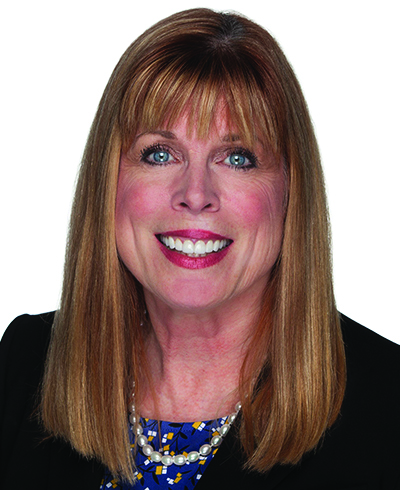
Dianne Lynch, CFP, ChFC, APMA, AWMA, CRPS, CRPC, is a financial advisor and vice president with Ameriprise Financial Services, LLC, in San Jose, CA. She specializes in fee-based financial planning and asset management strategies and has been in practice for 43 years. Ms Lynch can be reached at www.ameripriseadvisors.com/dianne.lynch/, 408-963-2303, and 225 W. Santa Clara St. Ste. 1600, San Jose, CA 95113.
Certified Financial Planner Board of Standards, Inc. (CFP Board) owns the CFP® certification mark, the CERTIFIED FINANCIAL PLANNER™ certification mark, and the CFP® certification mark (with plaque design) logo in the United States, which it authorizes use of by individuals who successfully complete CFP Board’s initial and ongoing certification requirements.
Ameriprise Financial, Inc. and its affiliates do not offer tax or legal advice. Consumers should consult with their tax advisor or attorney regarding their specific situation.
Stock investments involve risk, including loss of principal. High-quality stocks may be appropriate for some investment strategies. Ensure that your investment objectives, time horizon, and risk tolerance are aligned with investing in stocks, as they can lose value.
There are risks associated with fixed-income investments, including credit risk, interest rate risk, and prepayment and extension risk. In general, bond prices rise when interest rates fall and vice versa. This effect is usually more pronounced for longer-term securities.
The initial consultation provides an overview of financial planning concepts. You will not receive written analysis and/or recommendations.
Investment products are not insured by the FDIC, NCUA, or any federal agency, are not deposits or obligations of, or guaranteed by any financial institution, and involve investment risks including possible loss of principal and fluctuation in value.
Investment advisory products and services are made available through Ameriprise Financial Services, LLC, a registered investment adviser.
Ameriprise Financial cannot guarantee future financial results.
Securities offered by Ameriprise Financial Services, LLC. Member FINRA and SIPC.
© 2025 Ameriprise Financial, Inc. All rights reserved.
File #AMP7850037.1-RUSH (Approved until 04/30/2027)